SDSU Phish Bowl
PhishBowl
2026 - 2027
What to Know
A phishing scam involving fake art-project opportunities has been targeting SDSU students through social media, private text messages, and other personal communication channels. In these messages, the sender may claim to be an SDSU student working on an art project and ask other students to participate.
The scammer may request personal information, payment, or other sensitive details. They may also direct recipients to contact a separate phone number, email address, or social media account. The claimed art project is not legitimate.
Be cautious of unsolicited messages from individuals claiming to be SDSU students, especially when the request involves money, personal information, or moving the conversation to a private communication channel.
What to Do
- Do not reply to the sender or contact any alternate phone number, email address, or social media account provided.
- Do not send money or provide your Social Security number, student ID, financial information, account credentials, or other personal information.
- Do not click links or open attachments unless you independently verify that the message is legitimate.
- Verify independently with the person claiming to be an SDSU student using a trusted contact method.
- Take screenshots of suspicious social media messages or text messages, including the sender’s information and any links provided, and forward them to the IT Security Office at [email protected].
- Forward suspicious messages to the IT Security Office at [email protected].
- If you sent money or shared personal or financial information, contact your financial institution immediately and report the incident to the IT Security Office.
Sample Phishing Message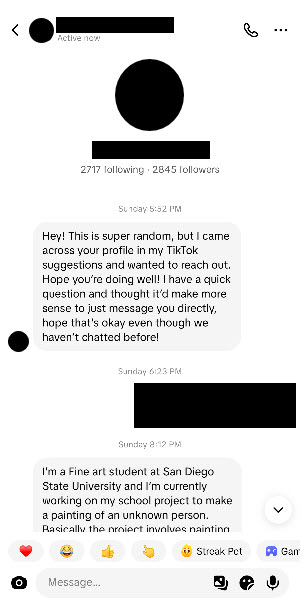
What to Know
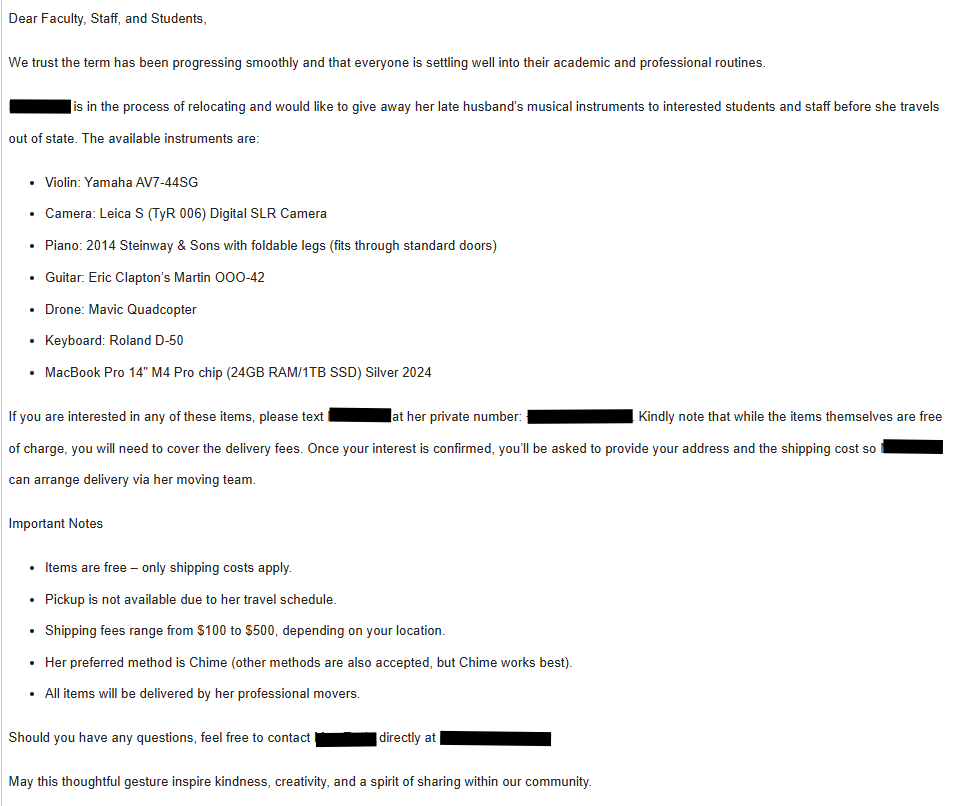
A fraudulent free-item giveaway scam is circulating that offers valuable musical instruments, equipment, or tools at no cost. The messages may impersonate multiple SDSU professors, faculty, staff, or other trusted individuals. In one example, the message offered a vintage Gibson guitar but was sent from an unrelated email address and directed recipients to contact a separate personal email account.
These scams may use familiar names, SDSU affiliations, or references to a recipient’s department or interests to appear credible. After making contact, the scammer may request payment for shipping, transportation, insurance, storage, or other fees. The item is not actually being given away.
What to Do
- Do not reply to the sender or any alternate contact address provided in the message.
- Do not send money or provide personal, financial, or account information.
- Be cautious of unsolicited offers for valuable instruments, equipment, or tools that are advertised as free.
- Verify independently with the person whose name appears in the message using a trusted contact method.
- Forward suspicious messages to the IT Security Office at [email protected].
- If you sent money or shared financial information, contact your financial institution immediately.
Sample Phishing Message

What to Know
This scam impersonates Meta and uses a Google Forms notification to look legitimate. The message says that “Meta Brand” shared a form and includes Meta’s logo, Google Forms branding, and an “Open” button.
Scammers can use legitimate Google services to send fake forms. The form may ask for your login credentials, personal information, payment details, or access to Meta business accounts.
The unexpected form, the generic title “Untitled form,” and the notice that “Meta Brand is outside your organization” are warning signs. Logos and a Google email address do not guarantee that the form is legitimate.
What to Do
- Do not click the “Open” button or interact with the form.
- Do not enter your SDSUid, password, Duo code, payment information, or other personal information.
- Do not approve requests for access to Meta Business accounts, Pages, advertising accounts, or other business assets.
- Report the message as phishing in Gmail and forward it to the IT Security Office at [email protected].
- If you clicked the form or submitted information, change your password and contact the IT Services Help Desk.
- Review your security methods by going directly to mysignins.microsoft.com/security-info. Confirm that your phone number, Microsoft Authenticator, and security keys are correct and up to date.
Sample Phishing Message
What to Know
A phishing email is circulating that impersonates the SDSU IT Services Help Desk and claims that significant security updates have been made to the SDSU email system. The message falsely states that the new functionality uses biometric data and requires recipients to provide consent by logging in and accepting revised terms.
The email uses SDSU branding, an official-looking footer, and a “Get Started” link to appear legitimate. However, logos, department names, and university contact information can be copied easily and do not confirm that a message came from SDSU. The vague security update, unexpected request for biometric consent, and link directing recipients to log in are warning signs of a credential-harvesting attempt.
What to Do
- Do not click the “Get Started” link or any other links in the message.
- Do not enter your SDSUid, password, Duo code, biometric information, or other personal information.
- Check the sender’s complete email address and hover over links to inspect their actual destinations.
- Verify unexpected IT notices through an official SDSU website or a trusted SDSU support channel—not through contact information provided in the email.
- Forward suspicious messages to the IT Security Office at [email protected].
- If you entered your credentials, change your SDSUid password immediately and contact the IT Services Help Desk.
Sample Phishing Message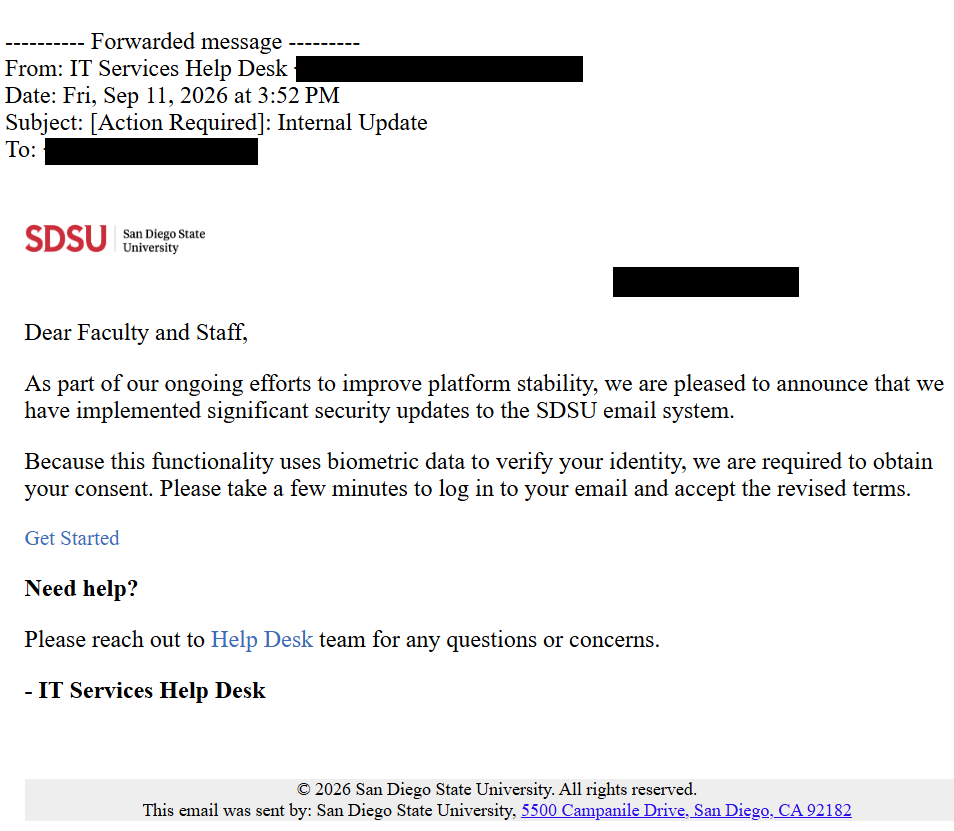
What to Know
This may be a legitimate QuickBooks invoice notification sent through Intuit’s QuickBooks system, but the invoice itself can still be part of a social engineering scam. Scammers can abuse legitimate invoicing services to send unexpected or fraudulent payment requests that appear more trustworthy because the email originates from a recognizable platform.
These messages may claim that an invoice is overdue, display an unexpectedly large balance, or pressure the recipient to review an invoice and arrange payment. Even when the notification comes from a legitimate Intuit or QuickBooks email address, that does not mean the person or business that created the invoice is legitimate.
The goal is to convince recipients to pay an invoice they do not recognize, interact with fraudulent information included in the invoice, or contact the scammer for further instructions.
What to Do
- Do not pay an invoice you do not recognize or were not expecting.
- Do not reply to or contact the business using phone numbers, email addresses, or other contact information provided in a suspicious invoice.
- Report suspicious emails by forwarding them with full headers to [email protected].
- If you need to access QuickBooks or Intuit, navigate to the official website directly rather than using links in an unexpected email.
- Forward the email QuickBooks or Intuit emails to [email protected] to alert Intuit’s security team.
Sample Phishing Message
What to Know
SDSU has received reports of phishing emails pretending to contain a confidential student report. The message may claim that a parent, guardian, or other individual submitted a report concerning a student enrolled in one of the recipient’s courses and asks the recipient to review an attached document.
In this campaign, the email uses urgency, confidentiality, and concern for a student to encourage the recipient to open an attachment. After the attachment is opened, the recipient may be instructed to install Zoho Assist, continue through installation prompts, and approve permission requests.
Zoho Assist is a legitimate remote-support product, but it is not listed as SDSU-supported software on public SDSU IT pages. Unexpected requests to install remote-access software or approve a remote-support session are highly suspicious. Following these instructions could allow an unauthorized person to remotely access the device, view sensitive information, install additional software, or perform actions using the recipient’s account.
The message may include SDSU-related titles, references to a department or course, university branding, or an SDSU copyright notice to appear legitimate. These details do not confirm that the email came from SDSU.
What’s Official
Legitimate communications involving student concerns or confidential reports should come through verified SDSU email addresses and approved university systems. SDSU personnel will not normally ask recipients through an unexpected email attachment to install remote-access software or approve a remote-support session to view a report.
SDSU’s public IT support pages direct students, faculty, and staff to the ServiceNow Service Portal and SDSU’s Zoom-based Virtual Help Desk for technical assistance. Do not install or use Zoho Assist unless the support request was initiated by you or independently confirmed through an authorized SDSU IT support channel.
When uncertain about a student-related or technical-support request, contact the appropriate department or SDSU office using contact information found independently on an official SDSU website. Do not use phone numbers, email addresses, or links supplied in the suspicious message.
What to Do
- Do not open or download the attached file.
- Do not install Zoho Assist or any other remote-access software requested through an unexpected email.
- Do not select “Agree,” “Allow,” “Yes,” or approve permission requests generated after opening the attachment.
- Do not provide your SDSUid, password, Duo code, or other personal information.
- Check the sender’s complete email address and verify that it belongs to an expected SDSU office.
- Report the message by forwarding it to [email protected].
- If you opened the attachment, installed the software, or approved remote access, disconnect the device from the network and contact the IT Services Help Desk immediately.
- Change your SDSU password immediately if you entered credentials or believe someone accessed your account.
- Delete the message after reporting it.
Sample Phishing Message

2025 - 2026
What to Know
SDSU has received reports of phishing emails pretending to be voicemail notifications. The message claims the recipient has received a new voicemail and includes details such as the recipient’s email address, date, duration, and a caller ID or reference number.
In this campaign, the sender appears as “Voicemail,” but the email address does not match SDSU, Zoom, Microsoft, or an SDSU phone service. The message may use Microsoft-style branding, official-looking formatting, and a “Listen to Message” button to make the notification appear legitimate. The link leads to a suspicious external website instead of an official SDSU or Zoom service.
SDSU now uses Zoom Phone Service as part of the Zoom One platform. Legitimate Zoom Phone users can manage calls and voicemail through trusted SDSU Zoom Phone resources, such as the Zoom Workplace app, the SDSU Zoom web portal, or official ServiceNow support channels. Do not use links in unexpected voicemail emails to access voicemail.
What’s Official
SDSU Zoom Phone Service is managed through official SDSU and Zoom channels. Zoom Phone can be used through a computer, laptop, tablet, or smartphone, and users may receive calls and voicemail through the Zoom Workplace app. For Zoom Phone help or questions, contact [email protected] or submit a ServiceNow support request.
Legitimate SDSU phone numbers commonly use the (619) 594-#### and (760) 768-#### ranges. However, phone numbers can be spoofed, so a familiar-looking caller ID does not guarantee that a call or message is legitimate.
What to Do
- Do not click the “Listen to Message” button or any links in unexpected voicemail notification emails.
- Do not enter your SDSUid, password, Duo code, or other personal information on a page reached through the message.
- Check the sender address carefully and look for mismatches between the sender, branding, and link destination.
- Hover over links before clicking to preview the real web address.
- Verify voicemail directly through the Zoom Workplace app, the SDSU Zoom web portal, or another trusted SDSU phone service, not through email links.
- Use Zoom Phone caller ID, “Maybe Spam,” and “Spam” labels to help evaluate suspicious calls.
- Let voicemail screen calls from unknown or suspicious numbers when appropriate.
- Report suspicious voicemail emails by forwarding them to [email protected].
- Contact [email protected] or submit a ServiceNow Report a Problem ticket if you need help with Zoom Phone spam, robocalls, suspicious calls, or SMS messages.
- Change your SDSU password immediately and contact the IT Services Help Desk if you clicked the link or entered credentials.
- Delete the message after reporting it.
Sample Phishing Message

What to Know
SDSU has received reports of scam text messages impersonating staff associated with an SDSU auxiliary. The messages come from unknown phone numbers and may use the name of a real or familiar SDSU employee.
In some versions, the sender asks the recipient to confirm receipt of the message or confirm their availability. If the recipient responds, the sender may claim they are in a meeting and unable to call, then shift to an urgent request involving gift cards, certificates, prepaid codes, or “certificate barcodes.”
This is a smishing scam designed to impersonate a trusted employee and pressure the recipient into purchasing or sharing prepaid codes.
What to Do
- Do not reply to the message.
- Do not call the number.
- Do not purchase gift cards, certificates, prepaid cards, or similar items.
- Do not send photos of receipts, card numbers, claim codes, PINs, or barcodes.
- Verify unexpected requests through an official SDSU email address or known phone number.
- Use your phone’s Report Junk or Report Spam option when available.
- Forward unsolicited text messages to 7726 (SPAM), the universal number monitored by mobile carriers.
- Report SDSU-related scam messages to the IT Security Office
- Report scam messages to [email protected].
Sample Message

What to Know
A scam is circulating that uses Meta/Facebook Business Manager partner request notifications to trick recipients into granting access to Facebook Pages, business assets, ad accounts, pixels, or credit lines. In this example, the message appears to come from “Facebook” and says the recipient received a Business Manager partner request from “Join in Meta Agency Partner Program.”
Attackers may spoof Facebook or Meta branding, sender names, logos, and email formatting to make a message appear legitimate. Even if an email looks authentic, do not interact with links, buttons, or attachments in the message. Instead, verify requests by going directly to Meta Business Suite, Facebook Recent Emails, or Meta Business Support Home through a trusted bookmark or by typing the address into your browser.
Meta says it will never ask for your password in an email or send a password as an attachment. Be cautious of misspelled lookalike domains, unexpected partner requests, unfamiliar requester names, and links urging immediate action.
What to Do
- Do not click links, open attachments, or use buttons in the email.
- Do not approve unexpected Meta Business Manager partner requests.
- Do not share passwords, payment information, recovery codes, MFA codes, or personal information.
- Verify the request by going directly to Meta Business Suite or Meta Business Support Home, not through links in the email.
- Confirm the requester through a trusted contact method before granting access to any Page, ad account, pixel, catalog, dataset, or credit line.
- Forward suspicious messages to the IT Security Office at [email protected].
- If you approved the request or entered credentials, change your password, review MFA settings, remove unauthorized partners, and contact the IT Security Office.
- Delete the message after reporting it.
Sample Phishing Message
What to Know
Predatory publishers and journals are deceptive academic operations that target faculty and researchers with flattering, unsolicited invitations to submit papers, join editorial boards, speak at conferences, or serve on review committees. Their goal is often to collect fees, personal information, manuscripts, or professional credentials without providing the legitimate peer review, editorial oversight, or scholarly standards they claim to offer. Warning signs include urgent deadlines, broad or unrelated subject matter, promises of fast publication, requests for CVs or headshots, discounted publication fees, and mismatched sender, reply-to, and website domains. Federal regulators have taken action against deceptive academic publishing practices involving false claims about journals and conferences and hidden fees.
What to Do
- Do not reply, click links, or open attachments.
- Do not send your CV, manuscript, photo, or other personal information.
- Verify journals and conferences independently, not through links in the email.
- Be wary of urgent deadlines, publication discounts, and offers that do not match your field.
- Check for mismatched sender, reply-to, and website domains.
- Forward suspicious messages to the IT Security Office at [email protected].
- Delete the message after reporting it.
What to Know
A phishing scam is circulating that impersonates San Diego State University and references Federal Student Aid, FAFSA, and ID.me reporting requirements. The message claims the university has not received your ID.me for “2026 Fall-T reporting” and threatens a $1500 IRS penalty if you do not act immediately, creating false urgency to pressure you into clicking a link. The email is sent from a personal Gmail account rather than an official sdsu.edu address and directs recipients to a Microsoft Forms “verification” page that asks for highly sensitive information including full name, phone number, student ID, university email address, and university password. The form uses SDSU branding to appear legitimate, but SDSU will never request your password or personal information through Microsoft Forms, text message confirmation, or unsolicited external links. This is a credential harvesting attempt designed to steal your SDSUid login and potentially enable account takeover, financial fraud, or identity theft.
What to Do
- Do not click any links or submit any information.
- Do not enter your password into any form reached through email.
- Hover over links before clicking to verify the real destination URL.
- Confirm that official university communications come from sdsu.edu email addresses.
- Never provide your password through email, text, or online survey forms.
- Report the phishing email by forwarding it to [email protected].
- If you clicked the link or entered credentials, immediately change your SDSU password.
- Verify that Duo Multi-factor Authentication is enabled and functioning.
- Contact the IT Services Help Desk if you believe your account may be compromised.
- Monitor your student account and financial aid portal for suspicious activity.
Sample Phishing Message

Sample Phishing Webite

What to Know
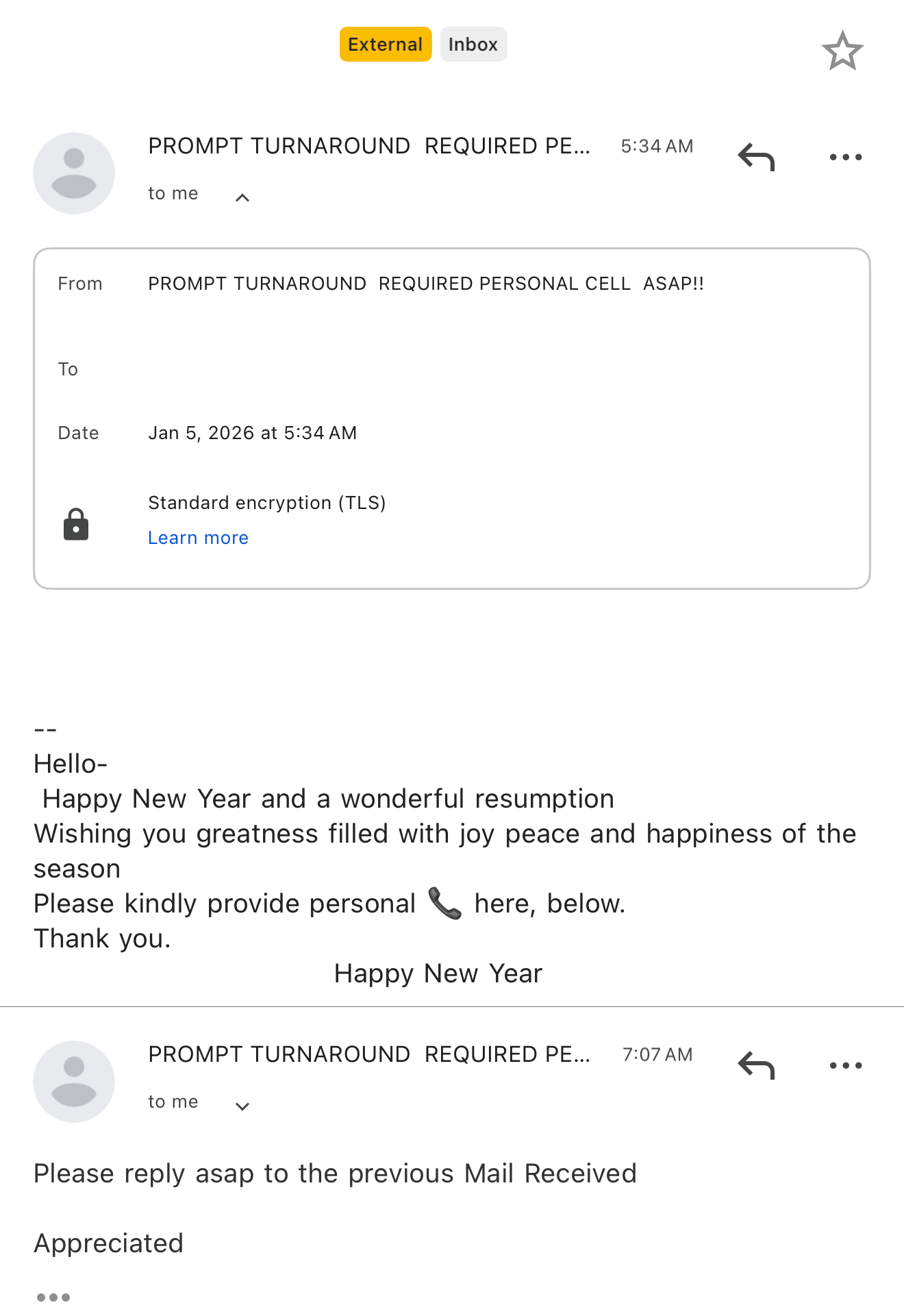
A smishing and phishing scam is circulating that impersonates a senior SDSU leadership figure and targets recipients through both email and text message. The initial email uses urgent language and seasonal well-wishes to request a personal phone number, creating a pretext to move the conversation off official university communication channels. Once contact is established via text, the scammer claims to be coordinating a confidential staff recognition initiative and applies pressure for immediate assistance. The messages then escalate to requests to purchase high-value gift cards, instructing the recipient to use personal funds with promises of reimbursement and a reward later. These tactics rely on authority impersonation, urgency, secrecy, and financial manipulation, which are common indicators of executive impersonation and gift card fraud. Recipients should not share personal contact information, should never purchase gift cards on behalf of a supervisor, and should report the messages immediately to SDSU IT Security.
What to Do
- Do not click any links or buttons in the message.
- Hover before you click: Inspect links by hovering your mouse to confirm the real web address.
- Look for HTTPS: Ensure the site uses a secure connection (https://) and that the domain matches sdsu.edu.
- Never enter your password on a site reached through an unexpected link or email.
- Report phishing attempts by forwarding the email to [email protected].
- If you entered credentials, immediately change your SDSU password and contact the IT Services Help Desk.
Sample Phishing Message
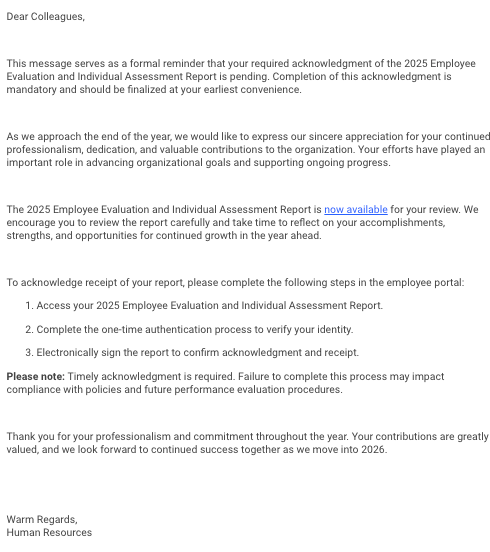
What to Know
A phishing email is circulating in SDSU inboxes that falsely claims to be from Human Resources and requests acknowledgment of a “2025 Employee Evaluation and Individual Assessment Report.” The message uses formal HR language, year-end appreciation, and compliance-oriented wording to appear credible. It directs recipients to access an employee portal, complete a one-time authentication process, and electronically sign the document. These tactics are designed to create urgency and trust while steering users to a fake portal intended to steal SDSU login credentials or personal information. Recipients should not click any links or complete any steps associated with this message.
Sample Phishing Message
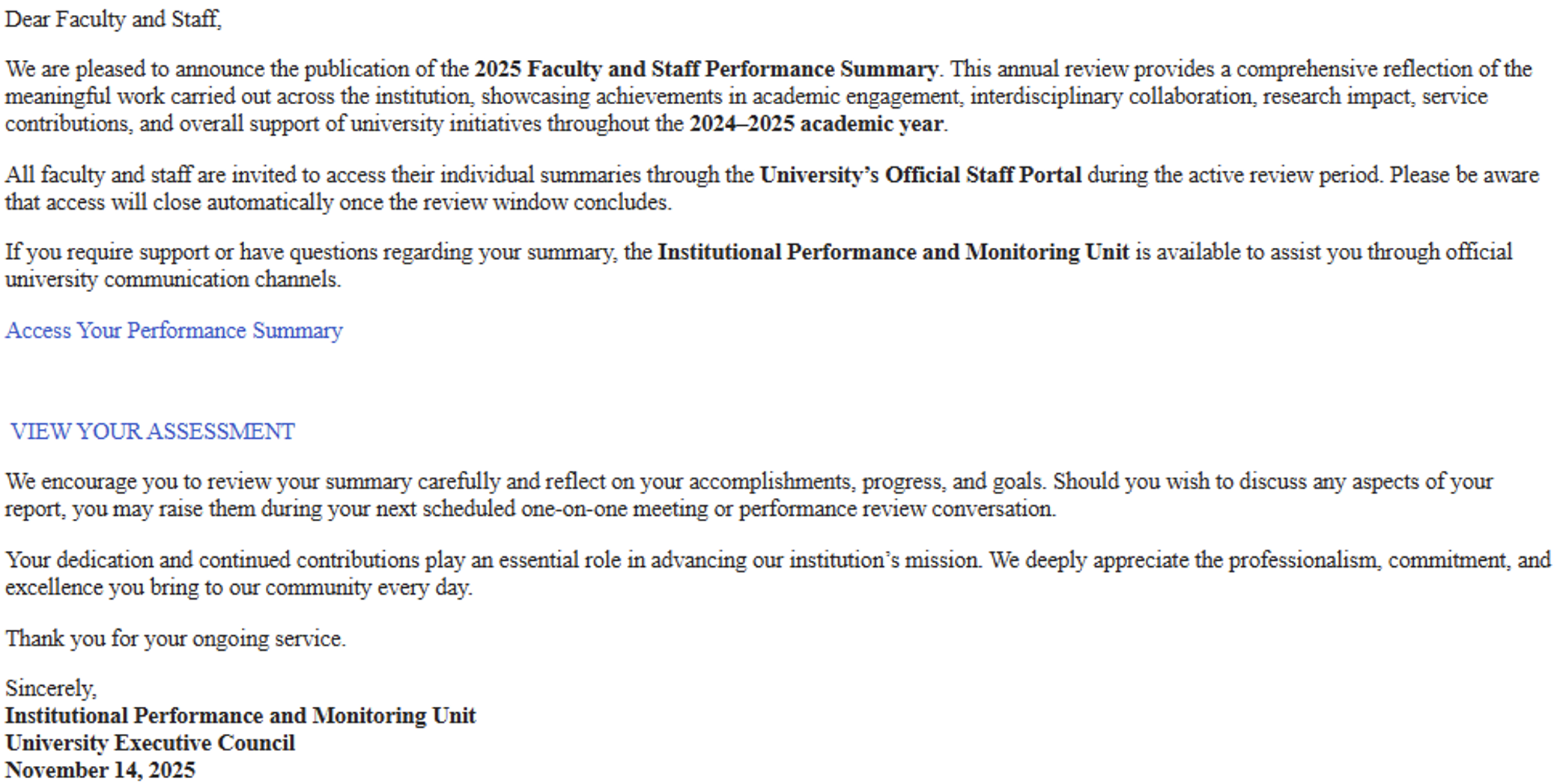
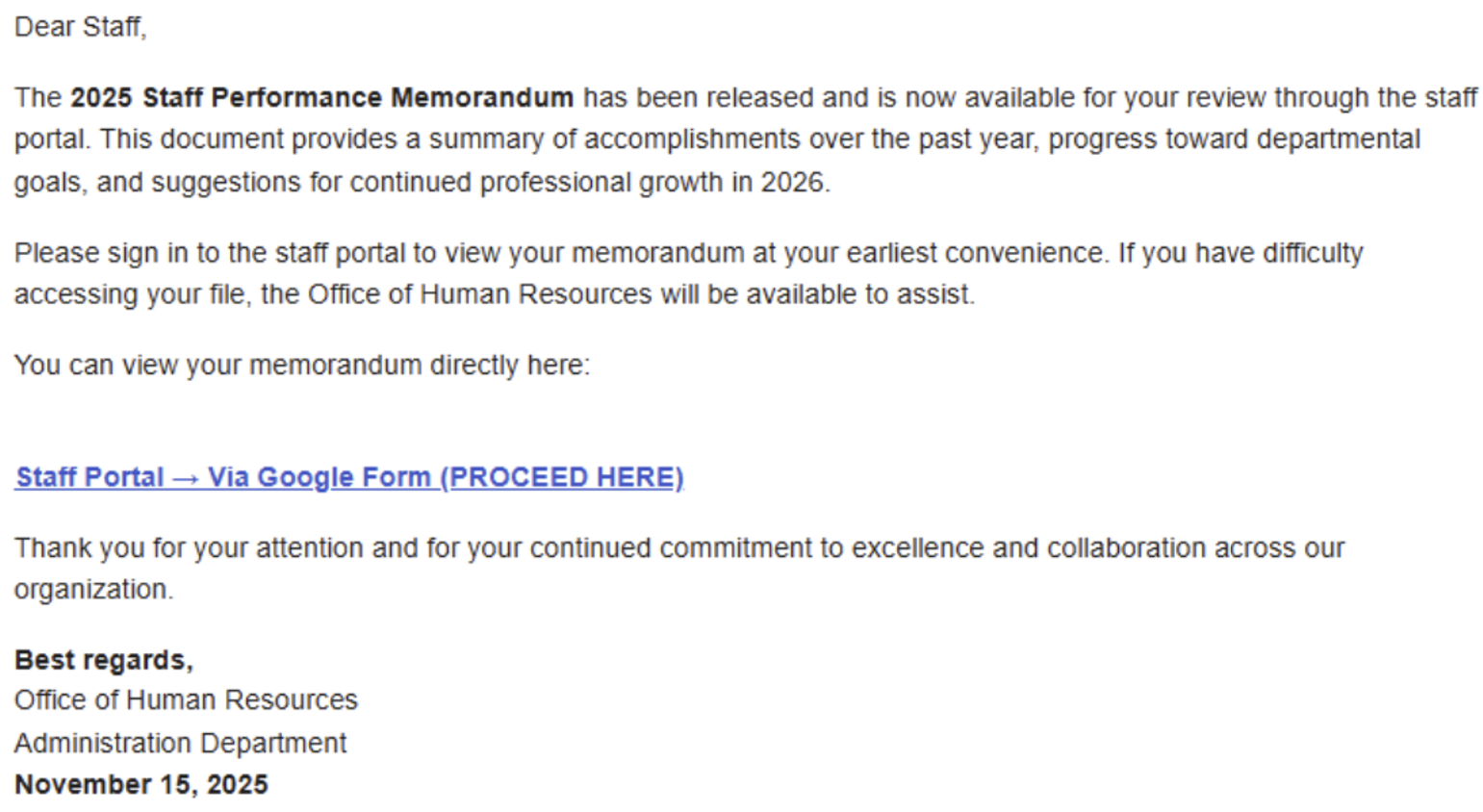
What to Know
A new phishing email is circulating that pretends to share a “Faculty and Staff Performance Summary” or “Staff Performance Memorandum.” The message uses formal academic language and official-sounding titles to appear legitimate. It urges recipients to click a link or button labeled “View Your Assessment,” “Access Your Performance Summary,” or “View Your Memorandum.” This is a credential-stealing scam designed to trick users into entering their login information on a fake portal.
Sample Phishing Message
Sample Phishing Message
What to Do
- Do not send money or share personal details.
- Do not respond, call, or text the sender.
- Never enter your password on a site reached through an unexpected link or email.
- Report phishing attempts by forwarding the email to [email protected].
- If you entered credentials, immediately change your SDSU password and contact the IT Services Help Desk.
Sample Phishing Message
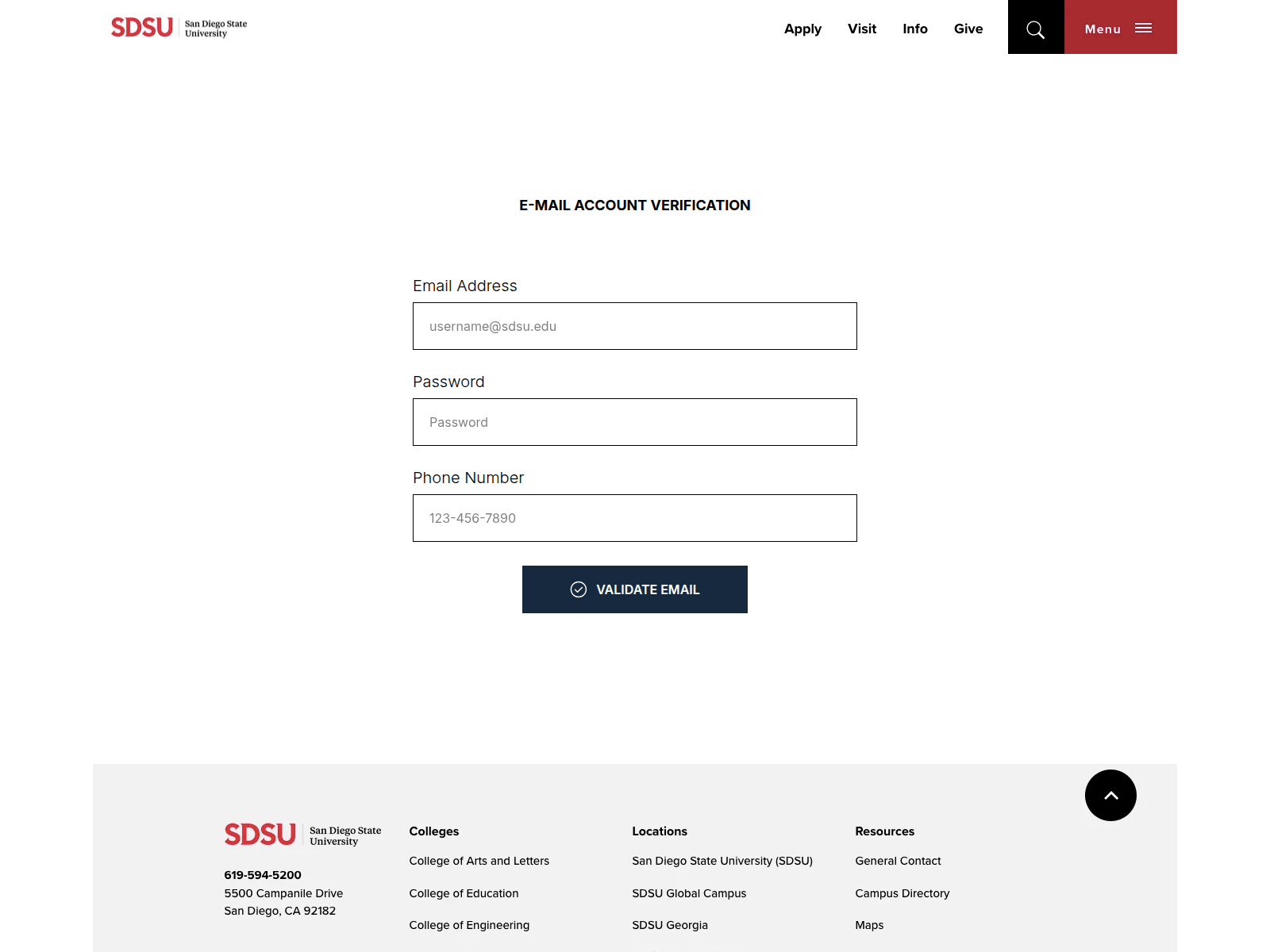
What to Know
Cybercriminals often send emails that look like official university communications to trick you into entering your username and password on a fake login page. These pages may copy the university’s branding and web layout but are designed to steal your credentials. Always verify that links point to legitimate SDSU websites before entering any personal information.
What to Do
- Check the sender: Verify that the email came from a legitimate SDSU domain.
- Hover before you click: Inspect links by hovering your mouse to confirm the real web address.
- Look for HTTPS: Ensure the site uses a secure connection (https://) and that the domain matches sdsu.edu.
- Never enter your password on a site reached through an unexpected link or email.
- Report phishing attempts by forwarding the email to [email protected].
- If you entered credentials, immediately change your SDSU password and contact the IT Services Help Desk.
Sample Phishing Message
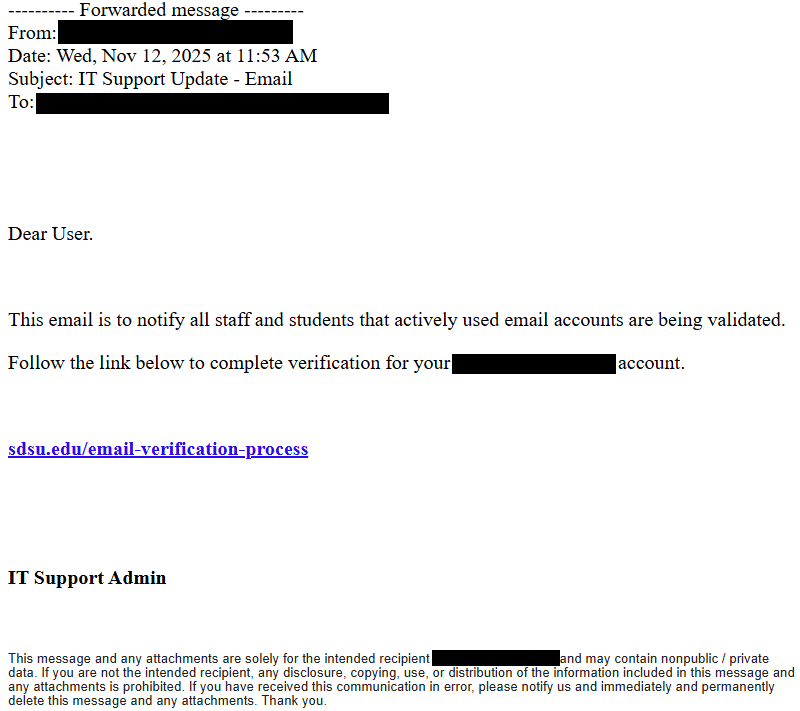
Sample Phishing Site
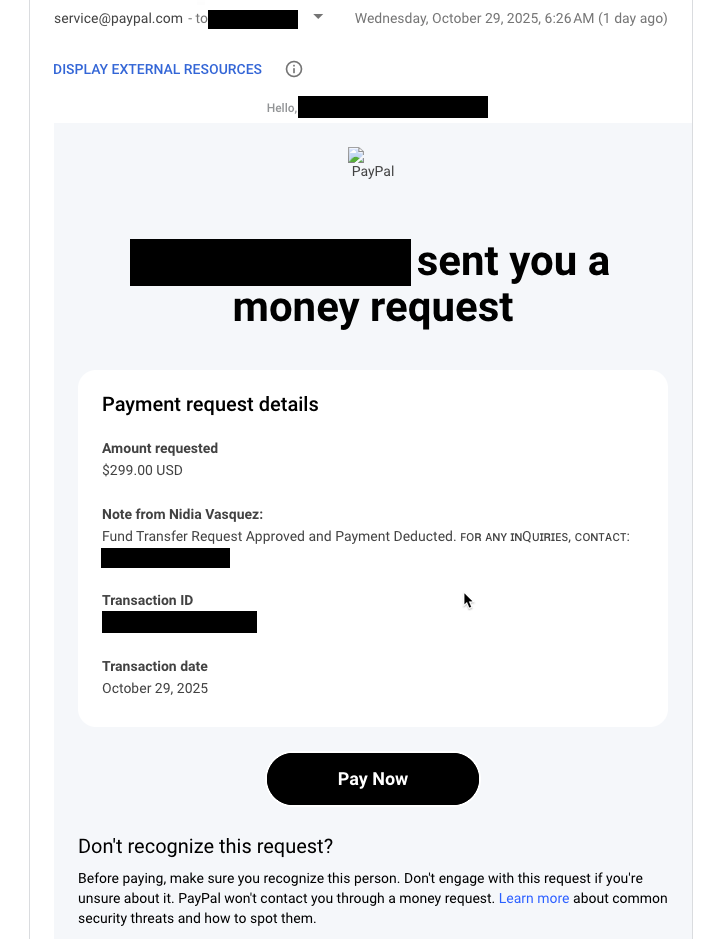
What to Know
This is a legitimate PayPal money request sent through PayPal’s system, but it is being used for a social engineering scam. The sender is a bad actor taking advantage of PayPal’s request feature to make the message appear official and trustworthy. The request includes a phone number to call, where scammers will likely pretend to be PayPal representatives or support staff. Their goal is to pressure you into authorizing or completing a payment for products or services that do not exist. The email itself comes from PayPal, but the content and intent are fraudulent.
What to Do
- Do not call the phone number listed, as it connects you to the scammer.
- Do not pay or respond to the money request unless you personally know and trust the sender.
- Report the email by forwarding it with full headers to [email protected].
- Log in to PayPal directly by typing paypal.com into your browser, not by clicking links in the email.
- Report the fraudulent request in PayPal by opening the request and selecting “Report a problem” or “Report this as suspicious.”
- Forward the email to [email protected] to alert PayPal’s security team.
- Delete the message after reporting it, and remind others that real platforms can still be used for scams.
Sample Message
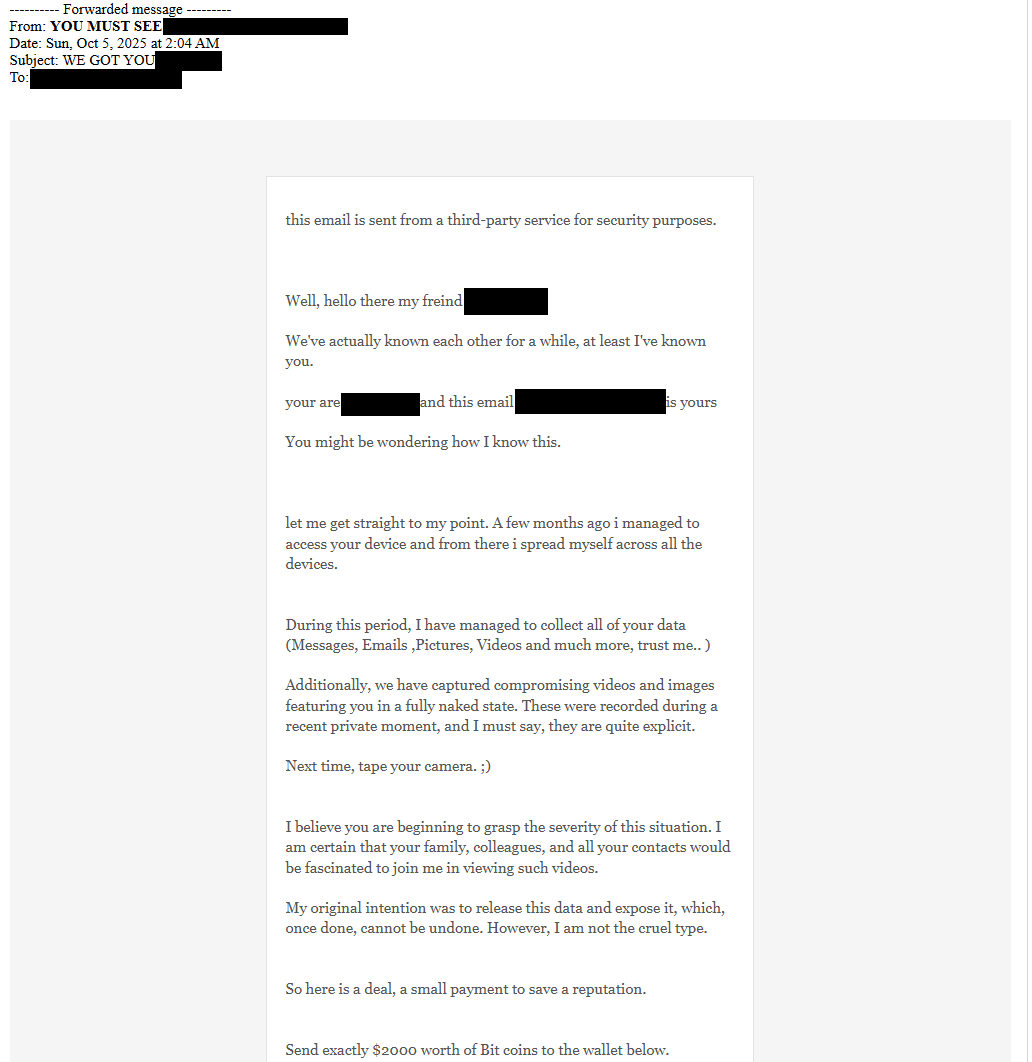
What to Know
A recent email circulating in the university community is a sextortion scam. The sender claims to have hacked your device, stolen your data, and recorded compromising videos, then demands payment in Bitcoin to prevent their release. These messages are fraudulent and rely on fear to pressure recipients into paying. Scammers often use publicly available information such as your name or email address to make the threat sound personal. Typical warning signs include poor grammar, urgent payment deadlines, cryptocurrency demands, and links or instructions that appear suspicious. The scammer does not actually have access to your devices or files, and paying them will not make the messages stop.
What to Do
- Do not reply, click links, or send any payment.
- Report the email by forwarding it with full headers to [email protected].
- Delete the message after reporting it.
- Change your SDSUid password and any other accounts that use the same password.
- Review your SDSU Duo Portal and ensure your recognize all devices there.
- Run antivirus or security scans on your computer and phone.
- Review your SDSUid sign-ins and report anything suspicious to [email protected].
- If you feel threatened or unsafe, contact University Police.
Sample Message
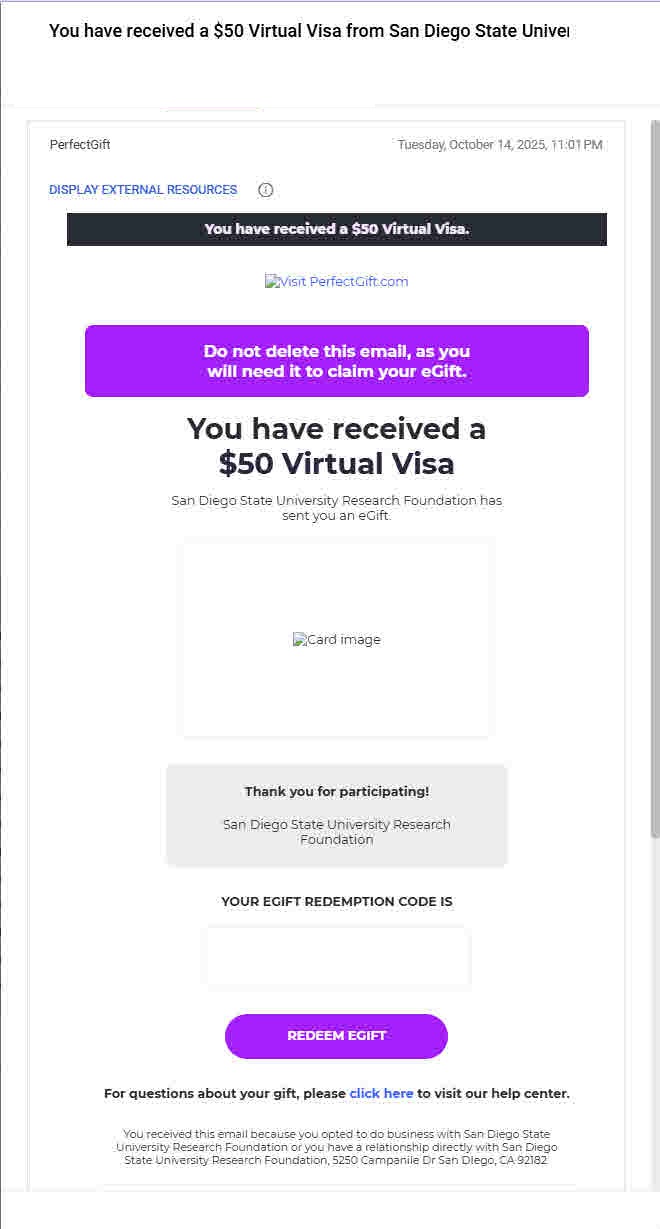
PerfectGift
Tuesday, October 14, 2025, 11:01 PM
You have received a $50 Virtual Visa.
Do not delete this email, as you will need it to claim your eGift.
You have received a $50 Virtual Visa
San Diego State University Research Foundation has sent you an eGift.
Thank you for participating!
San Diego State University Research Foundation
Your eGift redemption code is:
Redeem eGift
For questions about your gift, please click here to visit our help center.
You received this email because you opted to do business with San Diego State University Research Foundation or you have a relationship directly with San Diego State University Research Foundation, 5250 Campanile Dr, San Diego, CA 92182.
What to Know
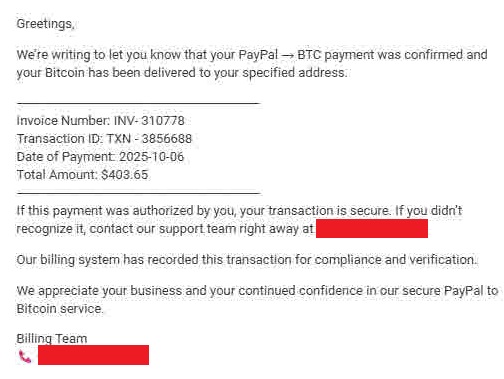
Scammers are sending fake invoices and payment notices through PayPal, Google Calendar invitations, and email to trick SDSU community members into paying for products or services that are not being provided, such as Bitcoin, hardware, or software. One common tactic is to include a phone number for a “support team” and urge you to call if you do not recognize the charge. There is no real transaction. Calling the number connects you to a call center that will work to defraud you.
What’s Official
- SDSU issues payments only through the Procure-to-Pay (P2P) system, never via unsolicited phone calls or consumer apps.
- For how to submit invoices, non-PO requests, and vendor payments, see SDSU’s Invoices & Payment Methods page.
- For official contact info and support channels, see the P2P Contact & Resources page.
- For policies, forms, and workflow instructions (including direct payments, wire transfers, credit card programs, etc.), refer to P2P Forms, Policies & Procedures.
What to Do
- Do not call phone numbers, scan QR codes, or click links in unexpected invoice or payment emails.
- Verify using SDSU sources. Check the sender and contact details against SDSU’s P2P Contact page and confirm that invoices reference a valid SDSU PO or approved Direct Payment Request process.
- Report suspicious messages by forwarding them to [email protected]. You can also report phishing using Gmail’s built-in reporting after forwarding.
- Need help with a payment or invoice? Open a ServiceNow Procure-to-Pay Request.
Sample scam message
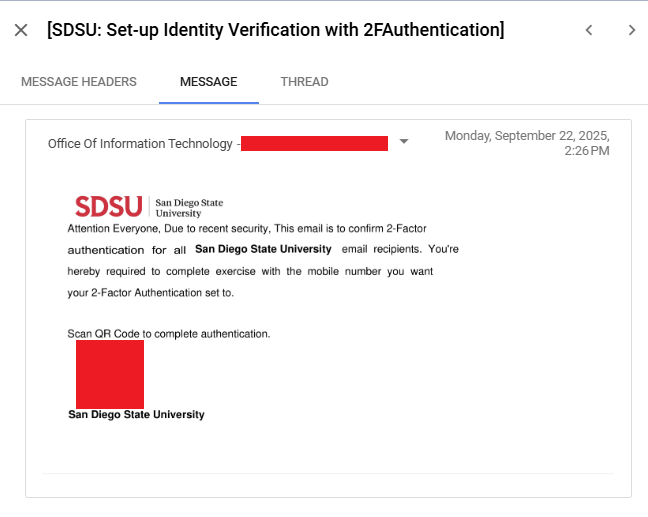
Office Of Information Technology
Monday, September 22, 2025, 2:26 PM
SDSU
San Diego State University
Attention Everyone, Due to recent security, This email is to confirm 2-Factor authentication for all San Diego State University email recipients. You're hereby required to complete exercise with the mobile number you want your 2-Factor Authentication set to.
Scan QR Code to complete authentication.
San Diego State University
What to Know
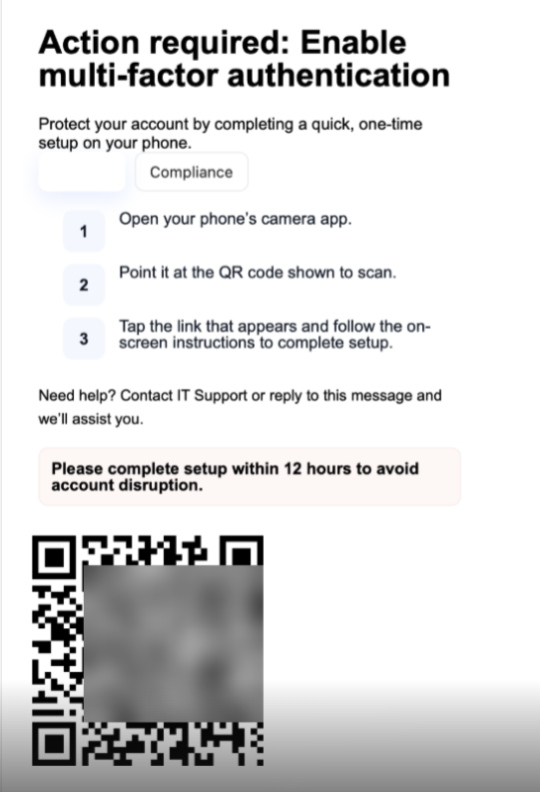
Scammers are reporting phishing emails that pretend to be IT support messages requiring students to enable multi-factor authentication (MFA). These messages often include urgent warnings, QR codes, or suspicious links. The goal is to trick you into giving away your login credentials or downloading malware. This example claims “Action required: Enable multi-factor authentication” and pressures you to scan a QR code and complete setup within 12 hours.
What’s Official
SDSU IT will never send MFA setup instructions by QR code or threaten account deactivation within hours. All official MFA enrollment and management is handled through DUO at duo.sdsu.edu or your official SDSUid account settings.
What to Do
- Do not scan QR codes or click links in suspicious emails.
- Verify official communications by checking the sender’s address and comparing it to SDSU’s known IT channels.
- Report suspicious messages by forwarding them to [email protected].
- If you already scanned or clicked, change your SDSUid password immediately and contact the IT Help Desk.
Example images
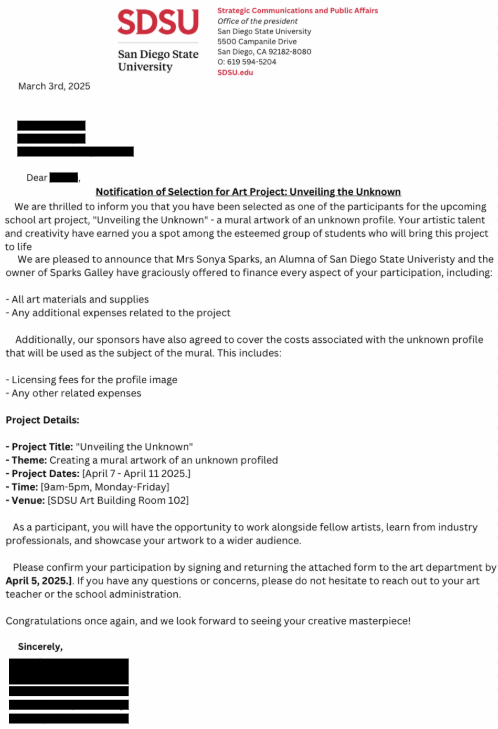
Title: Unveiling the Unknown - TikTok → iMessage impersonation using SDSU names
Posted: 2025-09-16
Summary
Scammers are impersonating SDSU faculty (using real names) via a fake social media accounts, then moving conversations to iMessage and attempting a money-forwarding scam. The fraudulent materials include an SDSU-styled letter and a seemingly legitimate TikTok profile used to build trust.
Indicators — what to watch for
- Unsolicited social-media DMs asking to continue on iMessage
- References to SDSU, class projects, or a named faculty member to “prove” legitimacy
- Promises “we’ll send you money” and instructions to forward funds or buy gift cards
- Official-looking documents (SDSU letterhead) with unusual requests (sign/return, provide personal info)
If you receive this
- Stop. Do not reply, click links, or send money.
- Capture evidence: take screenshots of the profile, messages, and any links (do not open links).
- Report & block on the platform: (e.g., TikTok → Report → Impersonation) and then block the account.
- Share with IT Security: email [email protected] with:
- Where seen (TikTok/iMessage/other) and date/time
- The sender’s handle/phone/email
- Screenshots (attach images)
- If you entered credentials: change the password immediately and enable 2-step verification on that account (and any reused passwords).
Financial-fraud alert — do not deposit checks or move money
- Do not deposit any check, cashier’s check, or e-check sent by the scammer, and do not agree to “process” or “forward” funds via Zelle, Venmo, Cash App, wire, crypto, or gift cards.
- Even if a bank shows a check as “available,” it can bounce days later, and you are responsible for the loss.
- If you already deposited a check or sent money:
- Contact your bank immediately and explain it’s an overpayment scam; ask about reversing the transfer and adding safeguards.
- Monitor accounts and set alerts for unusual activity.
- If personal info was shared, consider a credit freeze and follow recovery steps at IdentityTheft.gov.
Example images
What to Know:
Universities have reported scams involving fake social media posts promoting “Welcome Week” parties that ask for payment or personal information. There is no known scam at SDSU, but this message is shared to help our community stay alert.
What’s Official:
SDSU Welcome Week takes place August 21 to 30, 2025. All official events are free, on campus, and listed at nspp.sdsu.edu/welcome-week. Events include involvement expos, Aztec Nights, and Ask Me tents.
What to Do:
Avoid links or posts that promote off-campus or ticketed events. Do not share personal or payment info with unknown sources. Confirm event details through official SDSU channels. Report anything suspicious to [email protected].
2024 - 2025
---------- Forwarded message ---------
From:
Date: Thu, Aug 7, 2025 at 11:12
Subject: Important Duo MFA Updates
To:
SDSU | San Diego State University
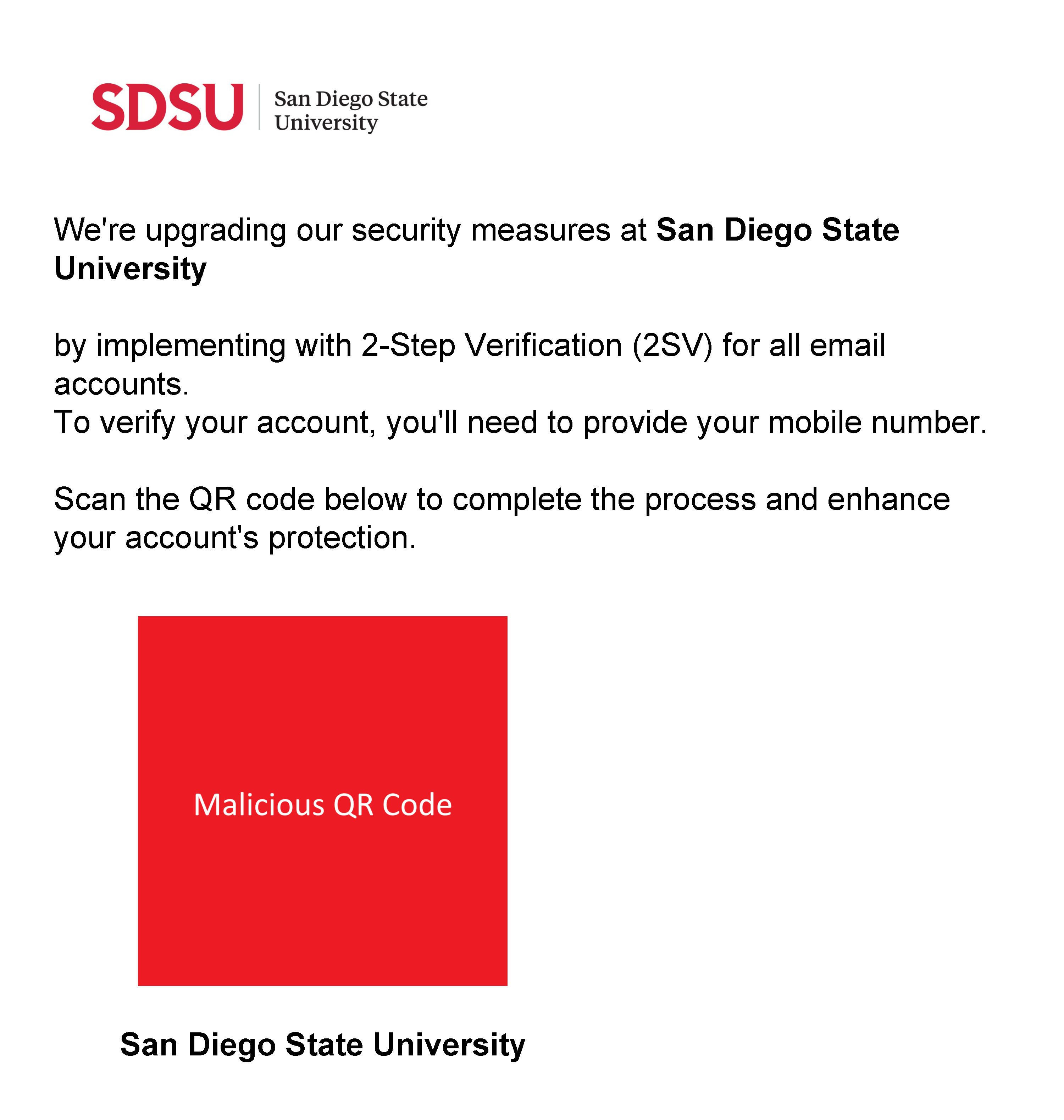
We're upgrading our security measures at San Diego State University
by implementing with 2-Step Verification (2SV) for all email accounts.
To verify your account, you'll need to provide your mobile number.
Scan the QR code below to complete the process and enhance your account's protection.
San Diego State University
---------- Forwarded message ---------
From:
Date: Wed, Aug 6, 2025 at 1:47 PM
Subject: [EXT] Financial Support Program For August 2025
To:
The Employee Assistance Program (E.A.P.) is now accepting applications for the 2025 cycle of the Financial Support Program.
This yearly initiative provides meaningful support for employees who may need a helping hand, whether that’s financial assistance (of up to $4,500), short-term guidance, or access to essential services.
Details:
Applications open: August 5, 2025
Available through: September 1, 2025
Support funding available for eligible applicants
Open to all employees
The E.A.P. is here to support you and your loved ones in the year ahead, offering a range of services including financial aid, relief materials, short-term counseling, referrals, and more.
To Apply:
Visit the Employee Support Program page.
Complete the online form with accurate details to ensure a smooth review.
If this program could help ease financial pressures and provide peace of mind, don’t hesitate to apply.
Best regards,
Employee Support Services
---------- Forwarded message ---------
From:
Date: Tue, Aug 5, 2025 at 12:32 AM
Subject: Attention: Boost Your Resumes With an Admin Role
To:
Dear Student,
We are pleased to announce an exciting opportunity for a Personal Assistant position tailored to accommodate your academic commitments while providing valuable professional experience.
Position Details:
Flexible scheduling options: Part-time or full-time hours
Work arrangement: Remote or on-campus, based on your preference
Responsibilities: Gain hands-on experience in administrative and organizational tasks
Career benefits: Enhance your resume with practical skills and professional experience
This role is ideal for students seeking to develop their professional skills while balancing their studies. To apply, please submit your application Today !
We encourage you to seize this opportunity to grow your career.
Best Regards
---------- Forwarded message ---------
From:
Date: Mon, Aug 4, 2025 at 3:31 PM
Subject: Adaptable Remote Position Ideal for Students
To:
Dear Student,
The Division of Human Resources is committed to helping you find part-time employment that complements your academic schedule. Beyond financial benefits, research shows that students who work between 5 and 15 hours per week often experience improved time management and academic performance.
We're excited to share a current opportunity for a Personal Assistant role that offers the following benefits:
Flexible Scheduling – Customize your work hours to align with your classes.
Remote Work – Complete tasks from home or anywhere on campus.
Professional Development – Build valuable skills in communication, organization, and administrative support that will benefit you in any career path.
Position Details:
Title: Personal Assistant
Type: Part-time / Full-time
Location: Remote
If you're interested in applying, [click here] to connect with verified employers who are actively hiring.
This is a great chance to gain practical work experience while staying on track with your academic goals.
Best regards,
The Division of Human Resources
---------- Forwarded message ---------
From:
Date: Wed, Jul 16, 2025 at 11:01 PM
Subject: Don't Just Dream It - Do It
To:
Hi All!
We are excited to welcome you to our Academic Work Program.
A flexible Job roles design with real-world experience, While obtaining financial resources toward your academic journey. Department of Human Resources connecting students with employers hiring Digital Administrative Assistant with good remuneration.
Position: Student Personal Assistant
Category: Remote or On campus
Shift and Schedule: 2-5 hrs/ day and 3 days per week
Requirement: Time management skills, Ability to multitask and prioritize daily reminders, handle emails, assist with small projects and no prior experience required.
Tap in now for consideration and get connected to the verified employers needing a Personal support specialist. This is a great chance to enhance your skills and to support your studies. Express your interest today to secure the position!
Sincerely,
Academic Work Program Team
---------- Forwarded message ---------
From:
Date: Wed, Jul 30, 2025 at 7:25 PM
Subject: Flexible Remote Job Opportunity for Students
To:
Dear Student,
The Division of Human Resources is here to support you in finding part-time employment that fits your academic schedule. Working part-time not only offers financial support, but studies show it can also improve time management and academic performance—especially for students working 5 to 15 hours per week.
We're pleased to share a Personal Assistant opportunity that offers:
Flexible Hours – Build a schedule around your classes.
Remote Work – Work from home or on campus.
Professional Growth – Develop skills in communication, organization, and administration that are valuable in any career.
Position Overview
Title: Personal Assistant
Type: Part-time / Full-time
Location: Remote
If you're interested, [Click Here to Apply] and connect with verified employers currently hiring.
Take advantage of this opportunity to gain meaningful work experience while successfully managing your academic journey.
Best regards,
The Division of Human Resources
From:
Subject: Important Duo MFA Updates
Date: July 21, 2025 at 12:23:45 PM PDT
To: undisclosed-recipients:;
Dear SDSU Students,
We are excited to announce two important updates to the Duo Multi-Factor Authentication (MFA) system. As part of these updates, we are conducting an email validation exercise to ensure that all accounts are up to date. To keep your account active, please confirm that your email is still in use by completing the authentication process.
CLICK HERE to complete authentication.
We are confident that these changes will make your MFA experience smoother and more secure, helping to safeguard your SDSU accounts. Additional enhancements are already underway to further improve the login experience and ensure the security of our systems.
Thank you for your cooperation and understanding as we implement these important improvements.
Best regards,
Ricardo Fitipaldi
Chief Information Security Officer
IT Security Office/IT Division
From:
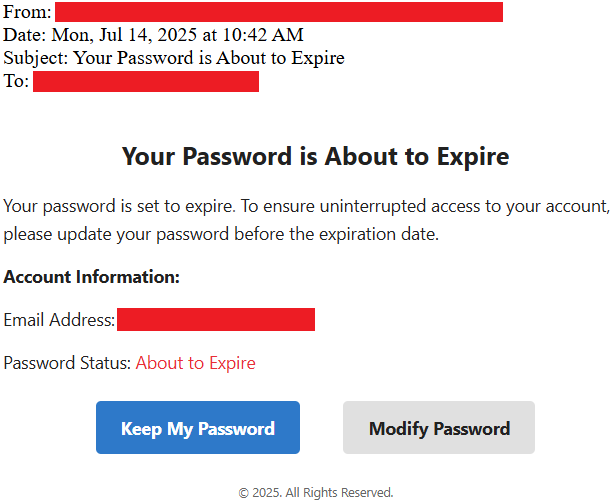
Date: Mon, Jul 14, 2025 at 10:42 AM
Subject: Your Password is About to Expire
To:
Your Password is About to Expire
Your password is set to expire. To ensure uninterrupted access to your account, please update your password before the expiration date.
Account Information:
Email Address:
Password Status: About to Expire
Keep My Password Modify Password
© 2025. All Rights Reserved.
From:
Date: July 7, 2025 at 2:35:16 AM EDT
To: undisclosed-recipients:;
Subject: CAMPUS NEWS UPDATE
Dear Qualified Student,
To help with some of your tuition costs, the Division of Human Resources is here to assist you in finding part-time job opportunities!
Working while in school has many benefits — and research shows that working just 5 to 15 hours/week can actually boost your academic success!
This is a flexible role where you choose your own hours, making it easy to balance studies and work. Whether you prefer to work remotely or on campus , this position fits your lifestyle.
Gain real-world skills that employers love!
Click below to apply for roles with licensed employers looking for Personal Assistants.
Position Details:
• Job Title: Personal Assistant
• Duration: Part-time / Full-time
• Location: Remote
⸻
Apply Now!
Start a meaningful work experience while you continue your education!
Best regards,
[Division of Human Resources]
[San Diego State University]
From:
Date: Fri, Jul 4, 2025, 11:23 AM
Subject: UNIVERSITY UPDATES
To:
Hello Student,
To help with some of your tuition costs, the Division of Human Resources is here to assist you in finding part-time job opportunities! 🧑🎓💼
📚 Working while in college has many benefits — and research shows that working just 5 to 15 hours/week 🕒 can actually boost your academic success! 📈🎓
💡 This is a flexible role where you choose your own hours, making it easy to balance 🧠 studies and 💼 work. Whether you prefer to work remotely 🏡 or on campus 🏫, this position fits your lifestyle.
✨ Gain real-world skills that employers love!
👇 Click below to apply for roles with licensed employers looking for Personal Assistants.
⸻
📌 Position Details:
• 🧾 Job Title: Personal Assistant
• ⏳ Duration: Part-time / Full-time
• 📍 Location: Remote
⸻
🎯 Apply Now!
Start a meaningful work experience while you continue your education! 🚀📘
From:
Date: Thu, Jul 3, 2025 at 6:24 AM
Subject: Career Boost Flexible Internship Program
To:
Dear Students,
The decisions you make today shape the opportunities you’ll have tomorrow. That’s why we’re offering you a chance to take a step forward.College is temporary. But the habits, skills, and experiences you gain now will carry you into your future. Success isn’t something that waits until graduation — it starts with little smart moves you make now.
Department of Human Resources connecting students with employers hiring for Personal Assistant roles designed to help you grow. This is about more than income — it’s about discipline, communication, time management, and personal development.
⸻
Position Overview:
Title: Personal Assistant
Hours: You choose (part-time or full-time
Location: Remote or On-Campus
Tasks: Organize schedules, handle emails, assist with small projects.
No prior experience required
Access the Application Portal and Take the First Step.Kindly Click Here 👉 to [Unlock Access] to Verified Employers and Apply Instantly the Positions Filling Fast.
This is not your average student job. It’s a stepping stone.
Sincerely,
HR Department
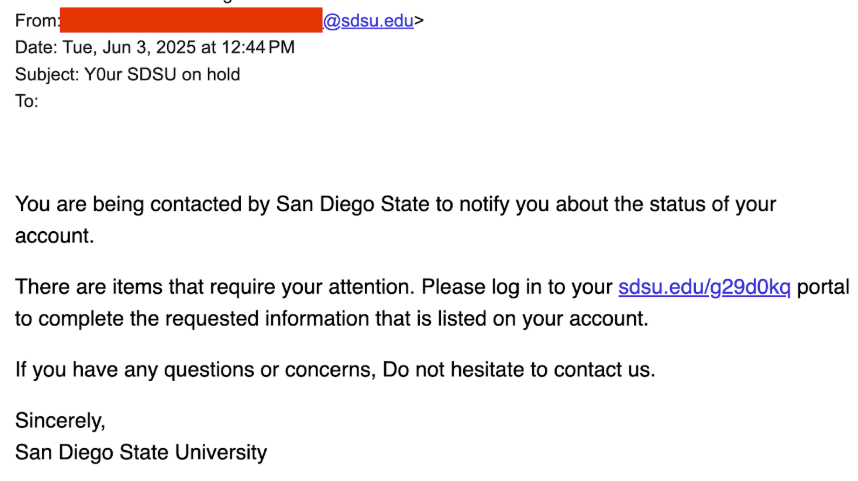
- Date Circulated: June 3, 2025
- Category: Phishing - Compromised Accounts
- Target: SDSU Students, Faculty, and Staff
- Attack Overview: A phishing campaign is currently targeting SDSU users. The fraudulent emails are being distributed from compromised SDSU accounts and attempt to trick recipients into entering their credentials on a fake login page.
- Content: The phishing messages typically include vague language such as “Items that require your attention,” grammar and capitalization errors, and suspicious links like sdsu[.]edu/g29d0kq. They may reference shared documents or urgent actions to lure users into clicking a malicious link that mimics a Microsoft login page. Once credentials are entered, attackers steal SDSUid usernames and passwords.
From:
Date: Tue, Jun 3, 2025 at 12:44 PM
Subject: Y0ur SDSU on hold
To:
You are being contacted by San Diego State to notify you about the status of your account.
There are items that require your attention. Please log in to your sdsu[.]edu/g29d0kq portal to complete the requested information that is listed on your account.
If you have any questions or concerns, Do not hesitate to contact us.
Sincerely,
San Diego State University
From:
Sent: Monday, May 19, 2025 5:50 AM
Subject: CAMPUS NEWS
Dear Qualified Student :
The Division of Human Resources is here to assist you in finding flexible part-time employment opportunities. Working while studying offers many benefits — research shows that 5 to 15 hours per week can positively impact your academic success.
This is a flexible position where you set your own schedule, with tasks that can be completed remotely or on campus. Plus, you'll develop valuable skills that employers seek.
Interested? Click **Apply Now** to connect with licensed employers seeking **Personal Assistants**!
*Position Details:**
*Job Title:* Personal Assistant
*Type:* Part-time / Full-time
*Location:** [Remote]
Take advantage of this opportunity to gain work experience while managing your studies!
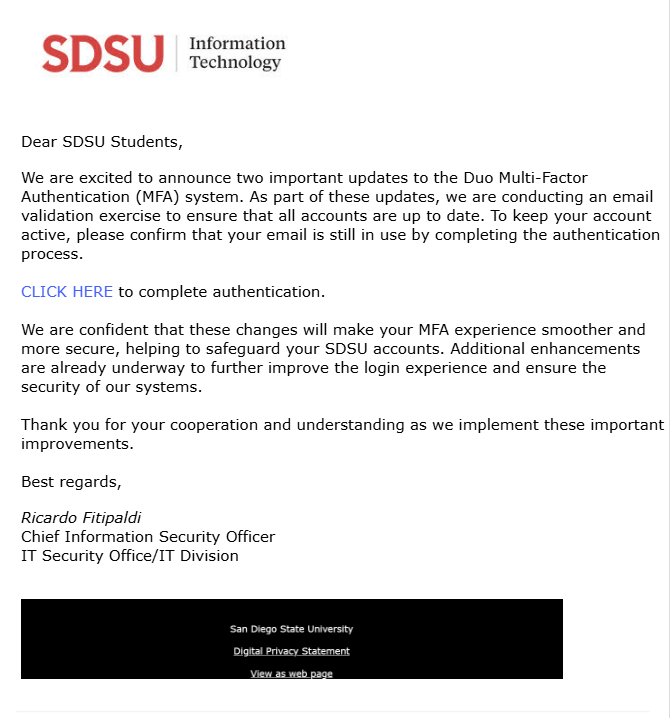
- Date Circulated: April 1, 2025
- Category: Phishing - MFA Scam
- Target: Students
- Attack Overview: A phishing email impersonating SDSU’s IT Security Office was sent to students, prompting them to complete a fraudulent authentication process.
- Content: Claims to announce Duo MFA updates and instructs users to validate their email to keep accounts active, linking to a fake authentication page used to steal credentials.
Date: Tue, 1 Apr 2025 08:52:59 -0700
Bcc:
Subject: Important Duo MFA Updates
From:
To:
Dear SDSU Students,
We are excited to announce two important updates to the Duo Multi-Factor Authentication (MFA) system. As part of these updates, we are conducting an email validation exercise to ensure that all accounts are up to date. To keep your account active, please confirm that your email is still in use by completing the authentication process.
CLICK HERE to complete authentication.
We are confident that these changes will make your MFA experience smoother and more secure, helping to safeguard your SDSU accounts. Additional enhancements are already underway to further improve the login experience and ensure the security of our systems.
Thank you for your cooperation and understanding as we implement these important improvements.
Best regards,
Ricardo Fitipaldi
Chief Information Security Officer
IT Security Office/IT Division
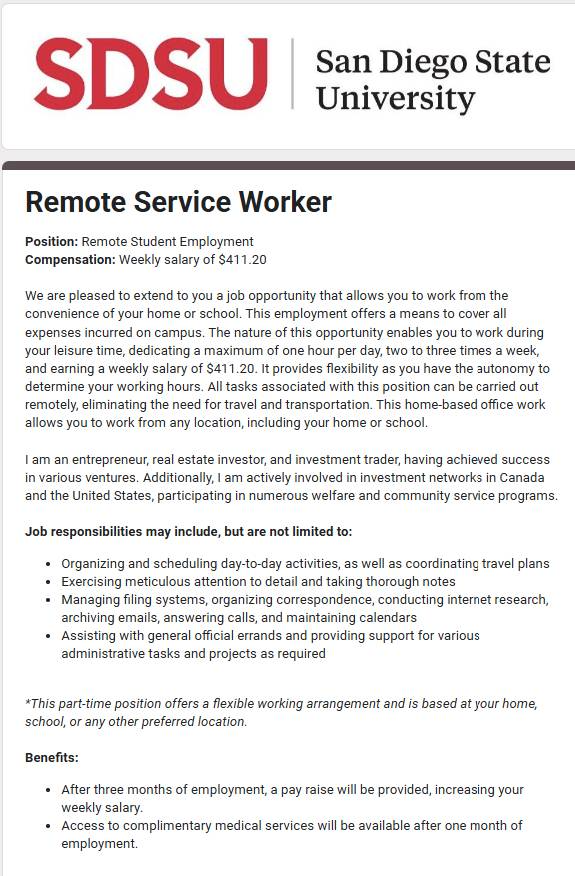
- Date Circulated: March 5, 2024
- Category: Fake Job Scam
- Target: Students
- Attack Overview: A compromised SDSU account was used to send credential phishing emails.
- Content: Includes link to a fraudulent Google Forms page where personal information is harvested.
From:
Date: Wed, Mar 5, 2025 at 10:08 AM
Subject: Flexible Remote Work Opportunity for SDSU Student
To:
Dear SDSU Students,
Are you looking for flexible remote work opportunities this spring semester?
San Diego State University (SDSU) is hiring students for Service Worker positions in the upcoming months.
This opportunity allows you to work remotely from anywhere of your choice, offering financial aid to help cover extra expenses incurred on campus.
Responsibilities include:
Organizing and scheduling daily activities.
Coordinating travel arrangements.
Demonstrating attention to detail and maintaining comprehensive notes.
Requirements:
Current SDSU student or alumni.
Additional Information:
Time Commitment: Flexible work schedules with a maximum of 1 hour 2-3 times a week.
Compensation: $411.20 (weekly wage)
Employment Start Date: March 5, 2025
CLICK HERE to apply.
San Diego State University.
Fraudulent Form in the email:
- Date Circulated: October 16, 2024
- Category: Fraudulent PayPal invoice
- Target: Faculty and Staff
- Attack Overview: An external email account sent a fake Paypal invoice to an SDSU employee
- Content: States Bitcoin was supposedly purchased and directs recipient to call a phishing phone number
From:
Subject: Thank you for your Order!16831044768
Date: October 16, 2024 at 7:01:55 AM PDT
To:
Hey there,
Your joy in our services encourages us to innovate further. We promise
to go above and beyond to ensure your experience is extraordinary.
Regards
- Date Circulated: October 8, 2024
- Category: Fraudulent PayPal invoice
- Target: Faculty and Staff
- Attack Overview: An external email account sent a fake Paypal invoice to an SDSU employee
- Content: Lists network devices that were supposedly ordered and directs recipient to call a phishing phone number
From:
Date: Tue, Oct 8, 2024 at 7:03 AM
Subject: Thank you!
To:
DATE: Oct 08, 2024
PayPal
INFORMATION ABOUT BILLS
Kindly,
We appreciate your order, which has been successfully placed and is prepared for shipping. You will hear from our delivery crew shortly. Kindly save this email for your records.
ORDER INFORMATION
Email:
Invoice Id:
36778209519
DETAILS OF PRODUCT
Product
Amount
Unit
Netgear Orbi Tri-Band Mesh WiFi 6 System. High-performance mesh Wi-Fi system covering large homes, supports up to 100 devices.
$488.00
01
Sales Tax:
$0.00
Subtotal:
$488.00
Total:
$488.00
NEEDS HELP?
We've taken care of your purchase. In case you have any inquiries concerning your purchase. Kindly let us know. We would be pleased to speak with you.
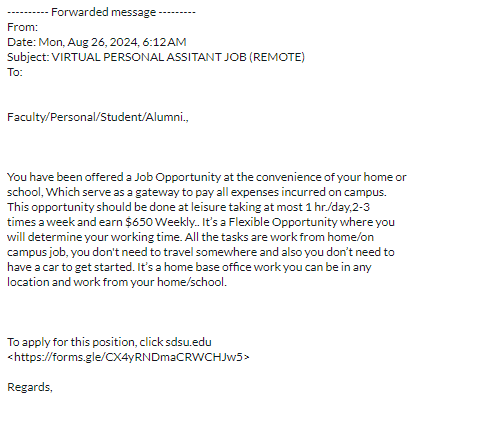
- Date Circulated: August 26, 2024
- Category: Fake Job Scam
- Target: Students
- Attack Overview: A compromised SDSU account was used to send credential phishing emails.
- Content: Includes link to a fraudulent Google Forms page where personal information is harvested.
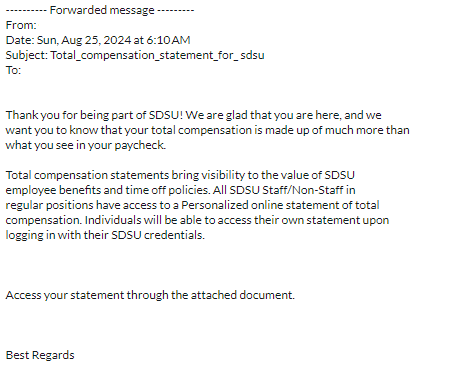
- Date Circulated: August 25, 2024
- Category: Employment Scam
- Target: Staff
- Attack Overview: A compromised SDSU account was used to send credential phishing emails.
- Content: Includes attachment with fraudulent link to harvest personal information.
How Do I Report Phishing Emails?
- If you receive a Phishing Email:
- Please forward the message to [email protected].
- After reporting to [email protected], if you are using the Gmail interface, you can report phishing directly to Google:
- Sign in to Gmail.
- Open the message you'd like to report.
- Click the triple-dot icon next to Reply, at the top-right of the message pane.
- Select Report phishing.
Get Help
To request a service, visit the IT Help Desk and create a ServiceNow Ticket.
Get Help
To request a service, please submit a ticket via ServiceNow.
Report an Incident
Please contact the Information Security team immediately if you experience or are aware of any of the following: